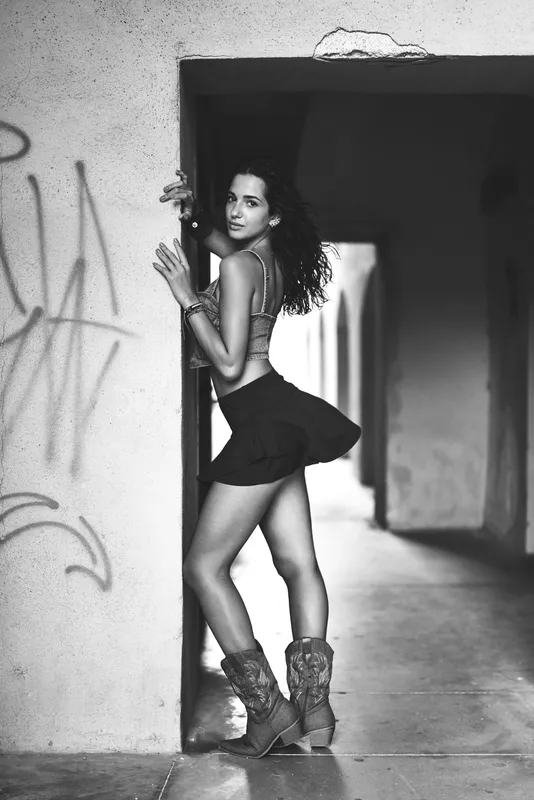
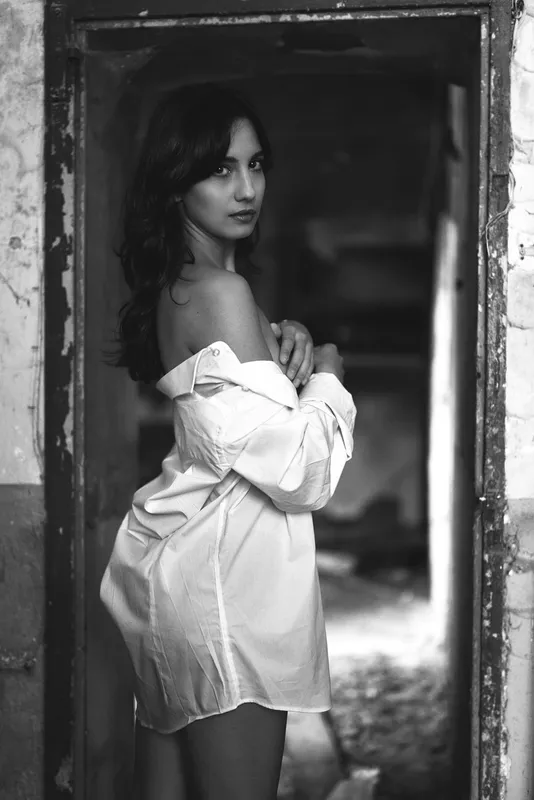


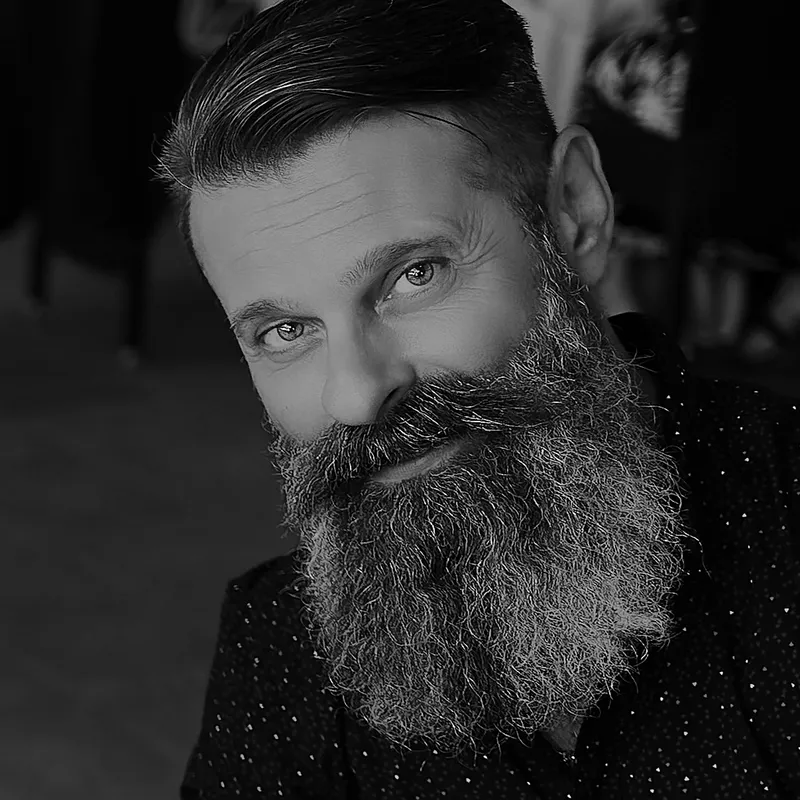


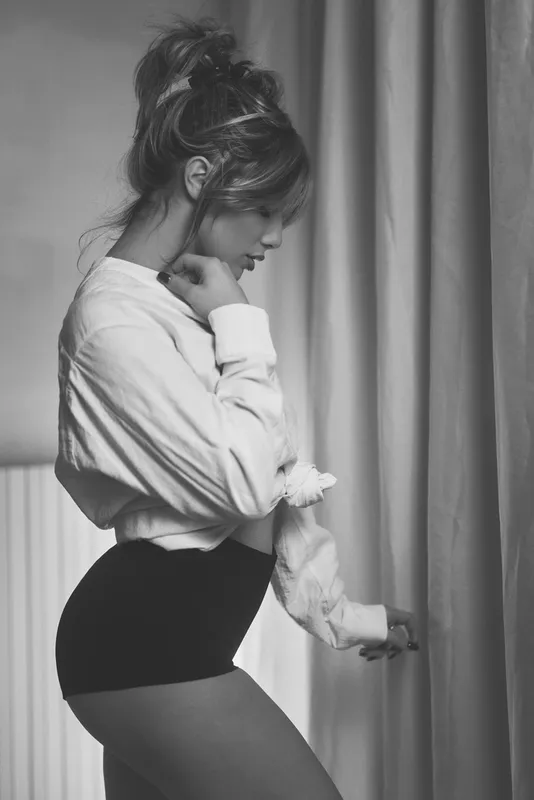
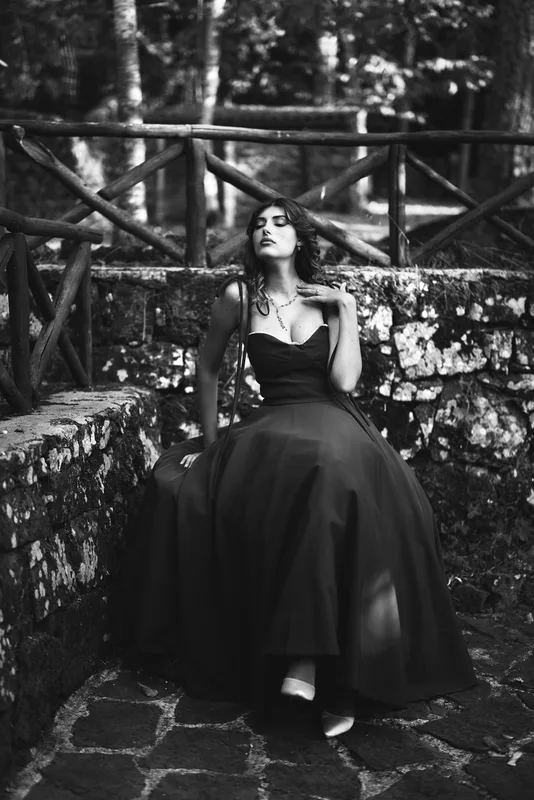


As a photographer, for years I asked myself a simple question. Why does the same image move one person to tears and leave another completely indifferent? At first I thought it depended on the photograph. Then I understood that it depends, almost always, on the person looking. And to truly understand it I had to step outside photography, and into psychology.
An image does not happen on the wall. It happens in the mind and heart of the one who looks at it.
The first principle, the one that explains almost everything, is projection. Psychology demonstrated it more than a century ago, when Hermann Rorschach and then Henry Murray began showing people shapeless blots and ambiguous images, asking what they saw in them. There was no right answer, and precisely for that reason the answer revealed the person looking. Faced with an open stimulus, each of us projects our own inner world, our desires, our fears, what we keep hidden even from ourselves. A photograph, in many ways, works the same way. It is a screen onto which the viewer, without realising it, deposits themselves.
In front of an image we always see a little of what we are. That is why whoever sees malice in it is speaking of themselves.
But we do not merely project. We do something deeper: we enter the image. The German philosophers of the nineteenth century, Robert Vischer and Theodor Lipps, called it Einfühlung, feeling into, and today's science has confirmed it by studying the brain. When you look at a face that is suffering, part of your own pain circuits lights up. You simulate within yourself the emotion you see; you live it in the body. Scholars of embodied simulation, such as David Freedberg and Vittorio Gallese, have shown that this mechanism is universal; it belongs to all of us. This is what I mean when I say that a photograph transmits emotions. It is not a metaphor, it is a fact. Whoever looks at a portrait of mine, if they let themselves go, truly feels something, because their body resonates with what the image carries within.
And yet not everyone comes to feel, and here psychology gave me the explanation I had always been looking for. Scholars of the mind have shown that we process what we perceive at different levels of depth, from a surface analysis of features, shape, pose, light, down to a deep analysis of meaning and emotion. The deeper one goes, the more lasting the trace the image leaves. Some stop at the first layer, and of a photograph see only the surface. Others go all the way to the heart. Roland Barthes, who was a philosopher even before being a theorist of the image, said it in beautiful words. There is a polite, distant interest in a photo, and then there is that detail which pierces you, which strikes you and no one else, because it touches exactly what you have become over the course of your life.
An image offers itself on the surface to everyone, but hands over its depth only to those who have learned to go down.
Why do some go down and others not? Research points to three reasons, and I recognise them all in my work. The first is sensitivity, which is almost a natural gift, but can be educated. The second is openness, the willingness to let oneself be touched, not to defend oneself, not to judge at once. The third is competence, that is, how much you have learned to look over the years, from the books you have read, the art you have seen, even the pain you have been through. This is why I maintain that reading an image is not a technical gesture; it is the fruit of everything a person has become.
Then there is an aspect that fascinates me more than any other. The camera sees things the eye, on its own, does not catch. Walter Benjamin called it the optical unconscious, a domain of the visible that surfaces only in the image, just as psychoanalysis brings to light what we hide from ourselves. In portraiture something similar happens. In a fraction of a second, a face lets fall the mask every human being wears for protection, and for an instant shows what it usually guards jealously. My task, as a photographer, is to wait in silence, and to catch precisely that instant.
In a portrait I look for the moment when the mask falls, and for an instant the truth of a person surfaces.
And then there is the gaze, which for psychology is anything but innocent. There is a pleasure in looking, which Freud studied, capable of stopping the eye on appearance, on the body, on the surface that seduces, and pinning it there. But there is also a deeper gaze, and psychoanalysis, from Lacan to a philosopher such as Georges Didi-Huberman, reminds us of something that sounds almost like a warning. When you look at an image, that image, in a certain sense, looks at you too. It exposes you. The way you choose to look, whether you stop at the body or seek the soul, says far more about you than you imagine.
When you look at a photograph, that photograph looks at you too. And it reveals who you are.
All this, for me, is not book theory. It is the ground I work on every day, often without even thinking about it. When I photograph, I do not impose an emotion, I light it, knowing it will be completed only in the encounter with whoever will look. I prepare an image capable of speaking to the depths, and then I step aside, because the rest happens in the mind and heart of another person, and no longer belongs to me. I do not claim to understand these mechanisms fully; I am still studying them, and every new face teaches me something. But one thing I know for certain.
I prepare the image. But the real photograph happens inside the one who looks at it, and that is where it becomes theirs.
This is why I believe that looking at a photograph is, in the end, a way of looking inside oneself. Every image that touches us gives us back a fragment of what we are, and sometimes shows us what we did not know we were keeping. The light I look for, in my portraits, is not only the light that illuminates a face. It is the light that, for an instant, comes on in the viewer as well. And when that happens, the author and the viewer, for a moment, become the same thing.
Frequently asked questions
- What is the psychology of an image?
- It is the study of what happens in the mind and heart of someone looking at a photograph. The meaning of an image is not deposited only within it, but is born in the encounter with the viewer, through projection, empathy and reading at different levels of depth.
- Why does a photograph move some people and not others?
- Because the depth with which one reads an image depends on three factors: sensitivity, openness to being touched, and the competence acquired over a lifetime. Those who are more sensitive and trained to look go beneath the surface; those who are less so stop at appearance.
- What does it mean that we see what we are?
- It is the psychological principle of projection. In front of an open image we deposit our inner world, and we end up seeing what we carry inside. That is why the way we look at a photograph reveals a great deal about us.
- How do I use psychology in my portraits?
- I do not impose an emotion, I light it, and I look for the instant when a face lets its mask fall. I prepare an image capable of speaking to the depths, and then I let the meaning be completed in the reading of whoever looks.

