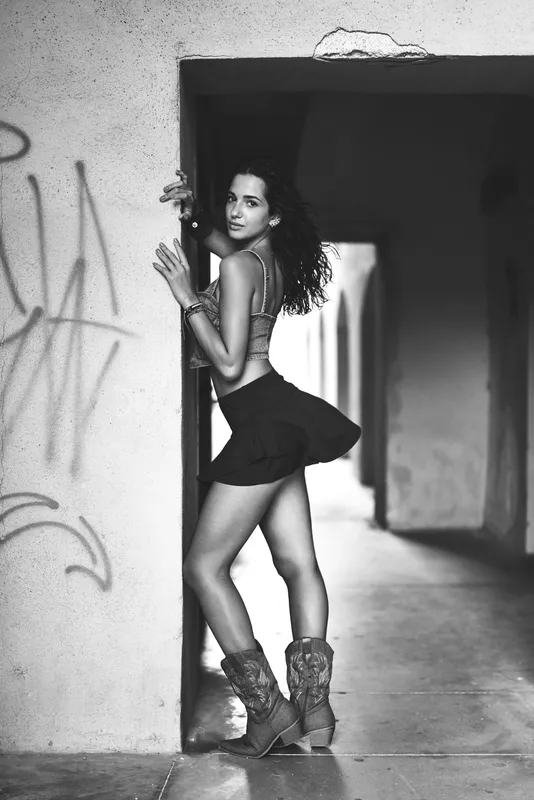
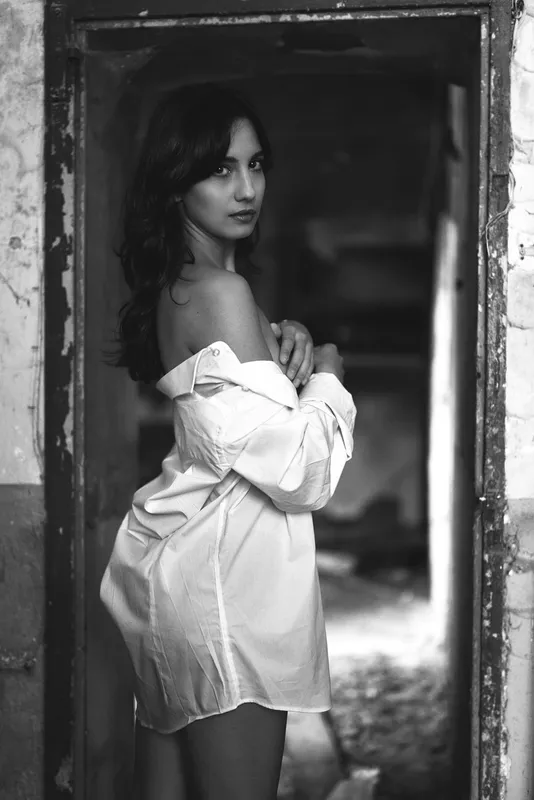
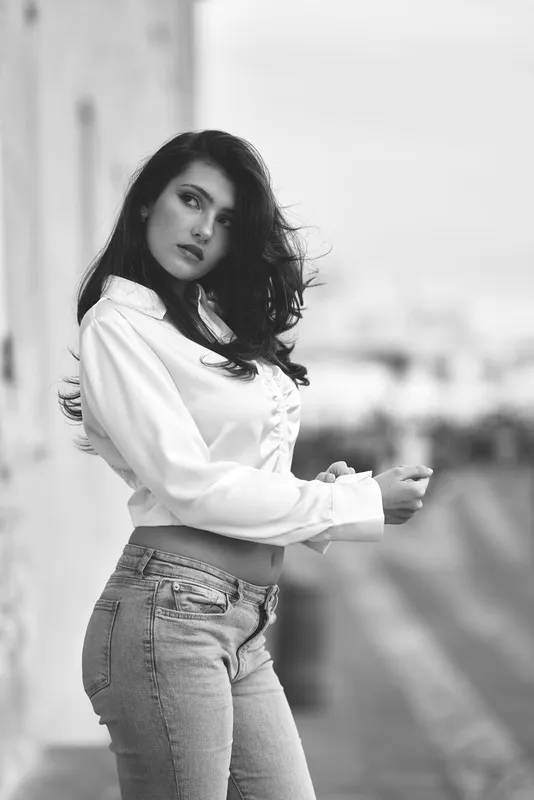
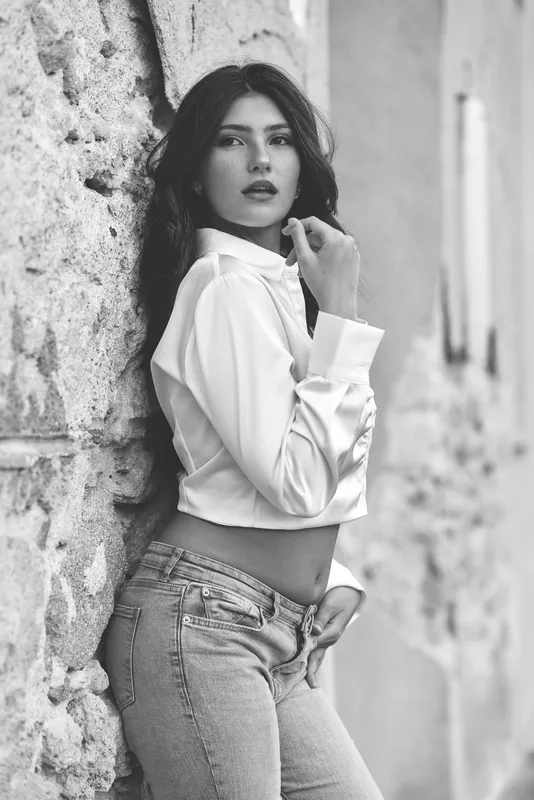
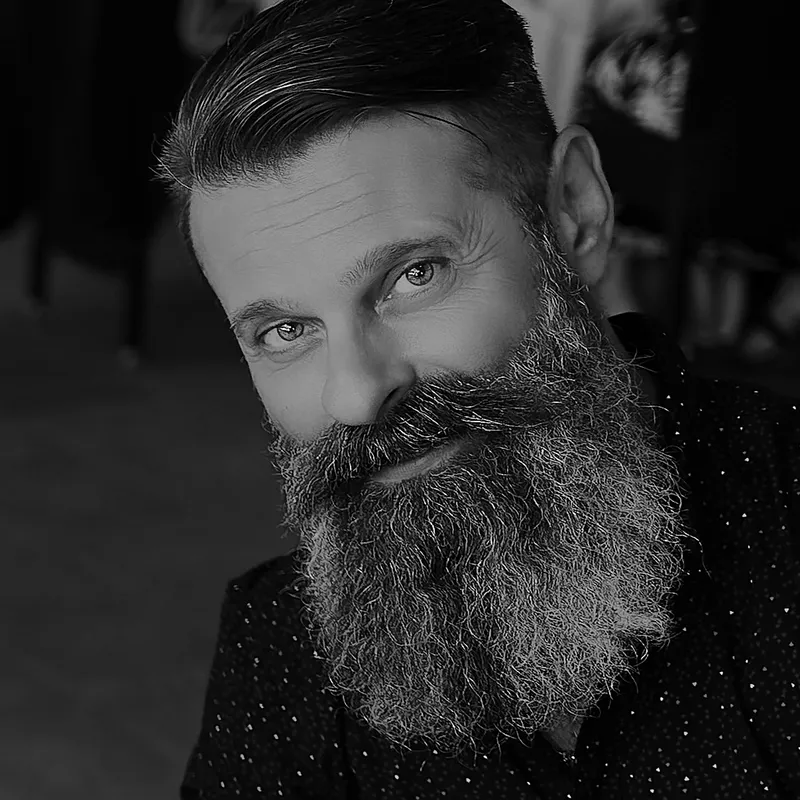
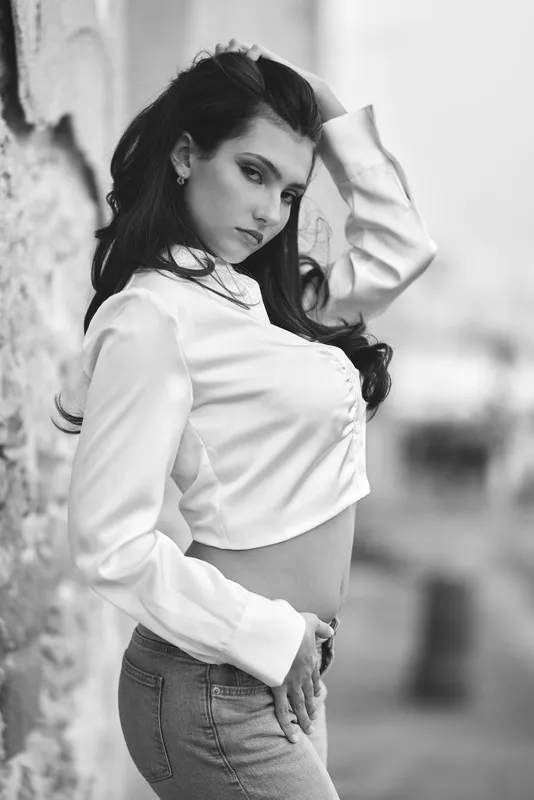
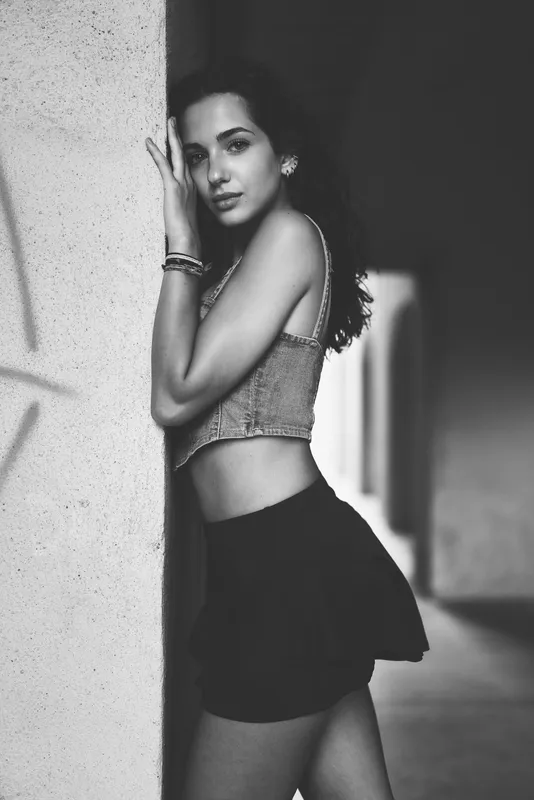
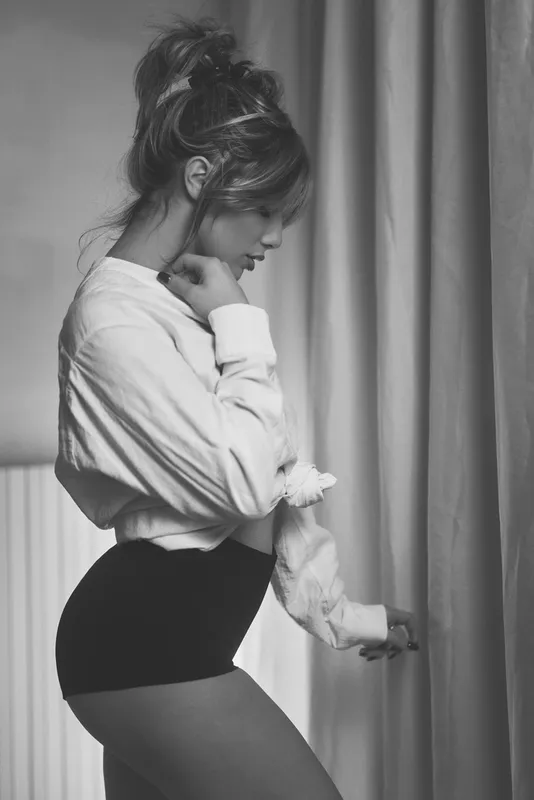
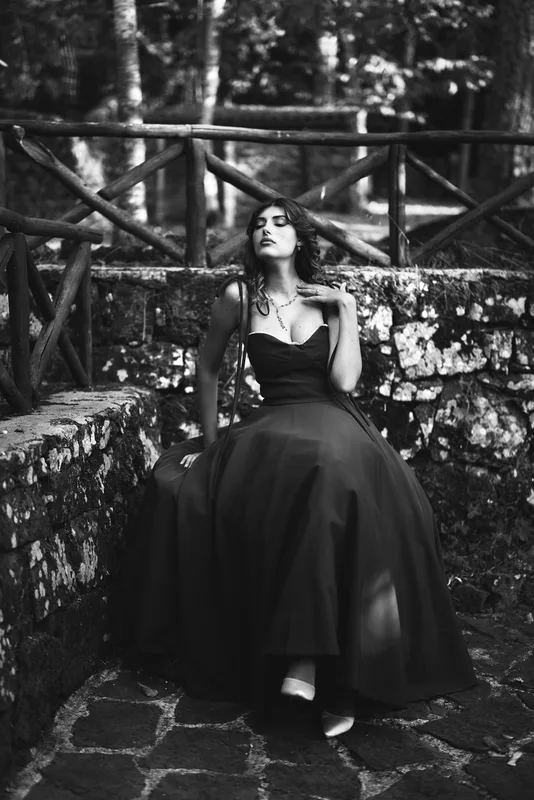
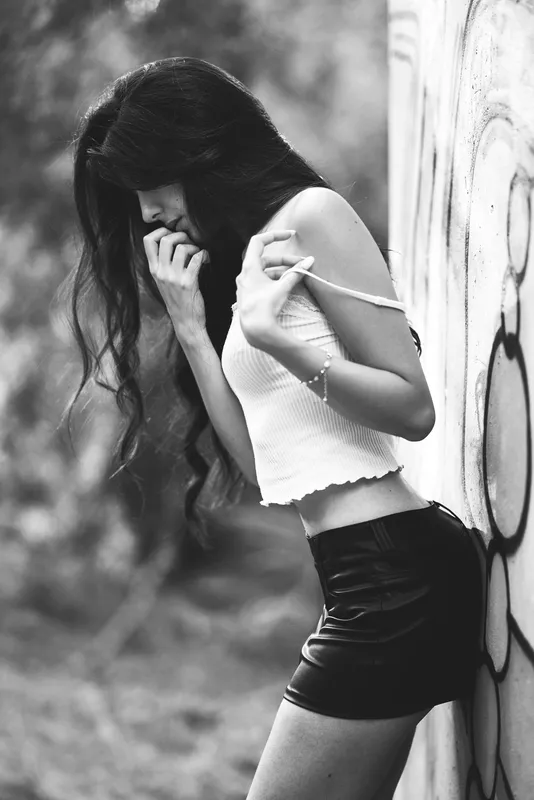

There is one thing I have learned in many years behind the lens, and it is worth more than any technical rule. A photograph is not judged, it is read. And reading is a different thing from glancing in passing. An image offers its surface to anyone, but hands over its depth only to those who are ready to receive it.
A photograph is not judged, it is read. And not everyone, it must be said, possesses the language.
When I shoot, it is precisely that depth I work on. I am not looking for a pretty face, I am looking for a true expression, an emotion to hold still, the essence of a person. Inside the image I deposit a feeling, an intention, sometimes even the trace of my own state of mind in that instant. Black and white, which is my language, helps me take away the superfluous and leave only this, the essential.
And yet, and here the most fascinating part begins, what I put into an image does not necessarily coincide with what the person looking at it takes from it. And that is fine, because a photograph is completed by two, the one who makes it and the one who reads it. Ansel Adams had understood this when he said that "there are always two people in every picture, the photographer and the viewer". And the master I love above all others, Giovanni Gastel, explained it with a sentence I always carry with me. He would tell his subjects, "I am not a mirror, I am a filter". The portrait I make of you is you, but filtered through what I am, through what I have read, seen and lived. And then, once more, filtered through whoever looks at it. Three gazes, inside a single image.
This is why I maintain that no one can truly judge a photograph without the right tools, and I am not speaking only of technique. I am speaking of sensitivity, of culture, of a disposition of the soul. Many of the critiques I read are flat, superficial, full of prejudice, and at times of great hypocrisy, because whoever judges an image by its appearance is almost always, without realising it, describing themselves.
The way we look at the world is the most honest portrait of what we are.
I say this with respect, but with clarity. Whoever sees only the surface in a pure image often stops at the surface in life as well. Whoever sees malice in it is speaking of their own. And whoever sees only vulgarity should perhaps ask themselves why they carry it inside. We always see what we are, and John Berger said it in simple words, "we only see what we look at", because looking is already a choice. Mediocrity, after all, always needs to raise its voice. Those who have learned to see, on the other hand, have first of all learned to be silent.
This is not an impression of mine; it is something I studied by reading, and then verified a thousand times in the field. The psychology of the image explains well why, in front of the same photograph, one person is moved and another walks past distracted. Faced with an open stimulus, each of us projects our own inner world, as happens before the blots of a test, and ends up seeing what we have inside. Scholars speak of levels of reading, from the surface layer of features, colour, pose, light, down to the deep layer of meaning and emotion. Some stop at the first, others go all the way down. And the reason, they say, lies in three precise things: aesthetic sensitivity, openness to experience, and competence, that is, how much one has learned to look over the course of a life. Roland Barthes explained it in his own way, distinguishing the polite, general interest in a photo from that detail which instead pierces you, which strikes you and not another, because it touches what you have become. This is the truth no instrument can give you.
An image offers itself on the surface to everyone, but gives itself only to those who have learned to read it.
There is one case in which all this becomes glaring, and it is the nude. When I photograph a nude I think of nature, of creation, of something ancient and pure. A body, in the right light, is emotion, is form, is life. But whoever has not learned to read sees only an undressed body, and stops there. It is not the image's fault; it is the limit of their gaze. Those who study these things have always distinguished the merely unclothed body from the nude that becomes art, and the difference does not lie in the body, it lies in the way of looking at it, in the intention, the meaning, the relationship. I always portray a woman for her strength and her dignity, never to reduce her to flesh. And if someone, in front of a nude of mine, manages to see only malice, once again they are not describing my photograph, they are describing themselves.
A nude is not a body to look at, it is an emotion to read. Whoever sees only the body has not yet learned to see.
This is why a photograph is not consumed, it is lived. It should be looked at calmly, listened to, let in, until it passes through you. Diane Arbus said that "a photograph is a secret about a secret", and she was right: the longer you look at it, the more you realise how much you do not know. Henri Cartier-Bresson, in his portraits, sought an inner silence, and it is the same thing I seek, that moment when the noise stops and only the truth of a face remains.
I did not come to think all this on my own. I have read a great deal, authors of the past and contemporary ones, photographers and scholars, and many have formed me, above all Giovanni Gastel, whose idea of the portrait as a filter of the soul accompanies me every time I raise the camera. And then there is a person I must always thank, my teacher and friend Sergio Derosas. I have always confessed to him, sincerely, that I listened to him and then did things my own way, following my own road. And yet his advice corrected many mistakes I used to make, and it remains precious to this day. On set, in the silence, I often have his voice in my ear reminding me of things. Because learning to see, in the end, is also knowing how to listen to those who saw before you. And I do not believe I have ever arrived, nor do I ever want to. I have been photographing all my life, and yet every new face, every person I meet, every day spent working, still teaches me something. One never stops learning, and one never stops growing.
One never stops learning, and one never stops growing. The day you believe you know everything, you have stopped seeing.
This is what reading a photograph means to me. It is not a judgement, it is an encounter. It is letting an image pass through you and, in doing so, reveal you to yourself. Because every time you learn to truly see, you are not understanding photography better, you are understanding yourself better. And so, if an image of mine leaves you in silence, if it forces you to stop, if it makes you feel something you cannot explain, perhaps you have truly read it. In that silence, where surface becomes depth, there is everything I try to put into a photograph, and everything I hope you will be able to find in it.
Frequently asked questions
- How do you read a photograph?
- Not by judging it from its appearance, but by reading it in layers, calmly, letting it in until it passes through you. The meaning is not only in the image; it is born in the encounter with the viewer, starting from their experience, their culture and their sensitivity.
- Why does not everyone read an image the same way?
- Because the depth with which one reads depends on the sensitivity, the culture and the disposition of the soul of the viewer. Psychology confirms it: faced with an open stimulus, each of us projects what we have inside, and the more sensitive go beneath the surface, while the less sensitive stop at what appears.
- Is a nude in photography art or appearance?
- It becomes art not through the beauty of the body, but through the way of looking at it, through intention, meaning and relationship. Whoever sees only a body in a nude has not yet learned to read the image, and ends up describing themselves.
- What do I look for in a portrait?
- A true expression and an emotion to convey, the essence of a person. I do not impose a meaning, I light it, and I let the viewer complete it with their own reading.

